Accessible VR interaction reviews can begin with a compact, repeatable lens rather than a promise that one setting solves every barrier. The supplied accessibility and XR resources point to subtitles, seated modes, reach, remapping, and alternatives to motion-based interaction as useful areas for that lens. This is an evergreen design review, not a claim about any platform’s current feature set.
Start with a review lens
A useful review does not need to declare an experience accessible or inaccessible in a single pass. It can instead identify where a journey depends on hearing dialogue, standing comfortably, reaching virtual objects, using a particular input, or making a body-driven motion. That framing keeps the discussion attached to the interaction itself.
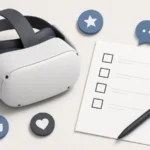
The five areas work best as prompts for discussion rather than as a fixed scorecard. A team can revisit them while sketching a flow, refining a prototype, or reconsidering a difficult moment in an established experience. The aim is to expose assumptions early enough that alternatives can be considered deliberately. This approach leaves room for the context, goals, and constraints of each VR experience.
Examine the interaction areas
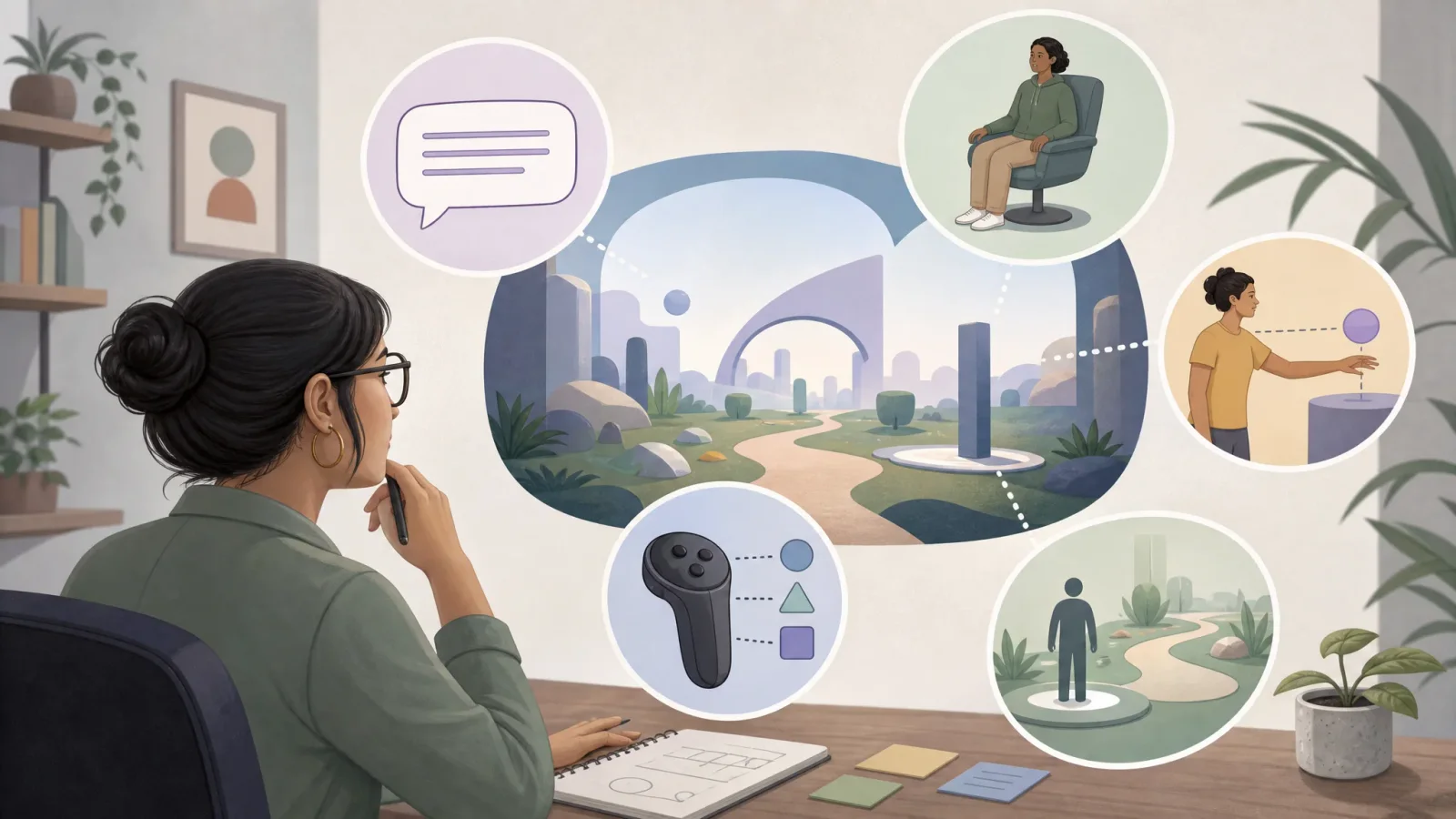
Subtitles invite a close look at how spoken or sound-based information reaches a participant. Reviewers can ask which moments rely on dialogue, cues, or other audio and whether the experience has another way to communicate what matters. The question is whether essential understanding rests on a single channel.
Seated modes focus attention on how an experience relates to posture and available play space. Teams can trace moments that presume standing, turning, bending, or moving through a room. They can then discuss whether the intended action can be approached from a seated position without changing the experience’s core purpose. This is a design conversation about interaction expectations, not a promise about a particular control option.
Reach directs attention to the placement and handling of important objects or interface elements. A review can identify actions that ask someone to extend, lift, hold, or precisely position their hands over time. It can also distinguish between actions that are central to the experience and habits inherited from an early layout. That distinction may reveal useful choices for interaction design.
Remapping raises a related question about whether one assumed input path dominates a task. Reviewers can note where an action depends on a particular button, gesture, or controller arrangement. They can then consider whether the task description is broader than that one path. Keeping the task separate from its assumed input makes the conversation more precise.
Alternatives to motion-based interaction bring attention to gestures and movements that an experience may request. Teams can identify where a motion is essential to meaning and where it is simply one way to trigger an outcome. It also avoids treating motion as automatically necessary or automatically unsuitable.
Why this review matters
A structured review gives cross-disciplinary teams a shared vocabulary for discussing interaction choices. Instead of reducing accessibility to a late checklist, the five areas can keep relevant questions visible throughout design conversations. The result is not a universal standard or a guaranteed outcome. It is a practical way to notice where an experience may be asking more of a participant than the team intended.
This lens can also improve editorial and product discussions around VR experiences. It gives writers, designers, developers, and experience leads concrete topics to describe without overstating feature support or implementation details. A review should say what it is examining and avoid implying what has not been verified.
Conclusion
Subtitles, seated modes, reach, remapping, and motion alternatives offer a focused starting point for accessible VR interaction reviews. Use them to investigate assumptions, clarify the purpose of each action, and keep options open while an experience takes shape. The strongest outcome is a more deliberate interaction conversation, not a blanket claim about accessibility.