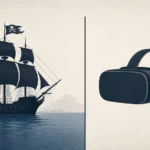

PlayStation Blog’s community feature centres on the Jackdaw, identified in the post as Edward Kenway’s pirate ship. The blog had asked readers to share Jackdaw moments using #PSshare and #PSBlog. The supplied extract presents the resulting post as a weekly highlights roundup of community-shared Jackdaw moments. That is a clear subject for a PlayStation audience, but it is not enough on its own to justify a VR-focused article. The more useful editorial question is whether the available evidence earns a place in a VR publication.
What the post actually offers
The sharing prompt focused on moments involving the Jackdaw. The highlights format is therefore best understood as community curation: player-submitted material gathered around a single theme. The extract supports that limited description of the post.
Its limits are equally important. A selection of shared moments is not automatically a product briefing, a design analysis, or an announcement. Editorial framing should preserve that distinction instead of asking a modest roundup to carry claims that its source material does not make.
The missing VR connection
The supplied sources do not establish a relationship between the Jackdaw community roundup and the separate discussion of VR interface design. This is the central constraint, rather than a minor caveat to bury beneath an appealing headline. A VR publication should be cautious when a familiar games brand and striking imagery create the appearance of relevance without demonstrating it.
Restraint is not a dismissal of the original post or its contributors. It is a commitment to describing material at the scale supported by the record. In this case, the strongest description is a non-VR community roundup whose fit with VR Experience Zone remains unconfirmed.
A useful but separate design reference
Road to VR examines Electronauts as an example of VR interface design. Its discussion identifies ease of use, hierarchy, and flexibility as central interface-design pillars. Those ideas offer a lens for reporting on VR experiences, directing attention toward how people find functions, understand options, and arrange tools around their needs.
However, the Electronauts discussion does not connect its interface analysis to the Jackdaw roundup. Keeping the two items apart matters. An adjacent VR article can help define the kind of reporting this publication values, but adjacency is not evidence of a shared subject. An analogy should clarify an editorial standard, not manufacture a link between unrelated coverage.
Why this matters for VR coverage
Readers benefit when a specialist publication has a dependable threshold for relevance. That threshold does not require every item to be technical, but it does require a demonstrated connection to the publication’s remit. Without one, coverage risks trading precision for recognition value.
The available record supports discussion of a PlayStation community feature and a separate VR design analysis. It does not support treating them as one story. Saying so plainly preserves room for stronger reporting if authoritative material later establishes a direct VR or XR angle.
Conclusion
The Jackdaw post may be worth monitoring as a PlayStation community item. For VR Experience Zone, though, the evidence supports an editorial decision not to publish it as VR news. Clear boundaries are part of useful editorial judgment: they make the stories that do fit more credible, more focused, and easier for readers to trust.
Sources
- Share of the Week: Assassin’s Creed Black Flag Resynced – Jackdaw
- VR Design Unpacked: Everyone Should Know These VR Interface Basics